

This guide cuts through the noise. Below are the five best cold storage wallets available today, ranked by their real-world security posture, usability, and value — whether you're a first-time buyer or managing a seven-figure portfolio.
#1 — Ledger Stax & Flex: The Best Cold Wallets of 2026
🎁 Special Offer: Purchase any Ledger wallet through our referral link and get up to $20 in bonuses on your order. → Claim your Ledger bonus here
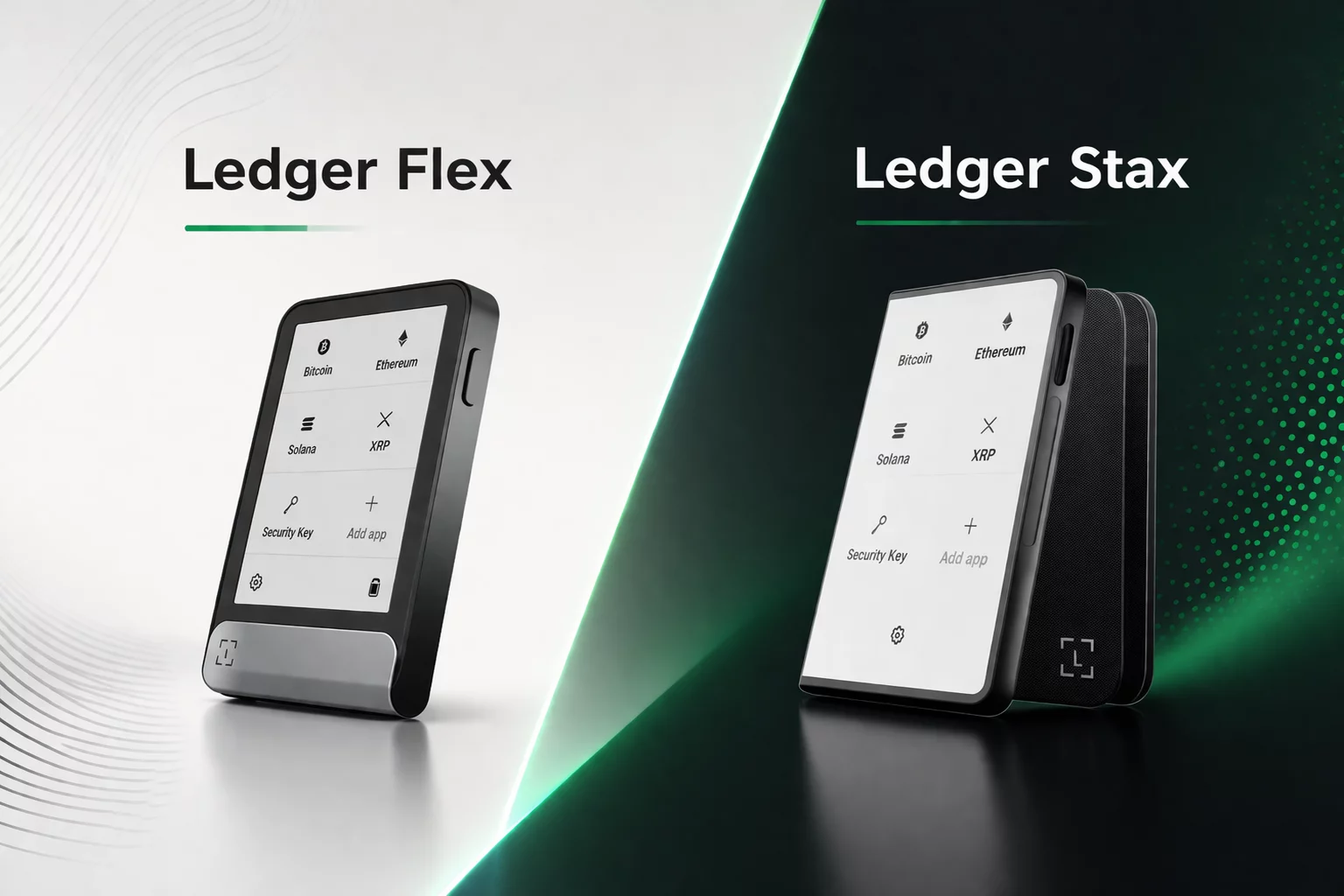
Ledger has been the most recognizable name in hardware wallets for years, and in 2026 it has done something few market leaders manage: it got significantly better. The Stax and Flex models represent a complete rethinking of what self-custody should feel like — less like operating a calculator, more like using a premium smartphone.
Why Ledger Leads the Pack
The most dangerous attack vector in modern DeFi isn't brute force — it's "blind signing." When a malware-infected computer shows you one transaction while your hardware wallet signs an entirely different one, your funds are gone before you realize what happened. Ledger's answer is the Secure Screen architecture: the display is driven directly by the EAL6+ Secure Element itself, not by the host computer. If your PC or phone is compromised, the attacker still cannot alter what appears on your Ledger screen. What you see is exactly what gets signed.
This "Clear Signing" philosophy, combined with Ledger's mature software ecosystem and its broad third-party integrations, is why the Stax and Flex sit at the top of this list.
Ledger Stax — The Premium Choice
Designed in collaboration with iPod creator Tony Fadell, the Stax is unmistakably the most refined hardware wallet ever produced. Its signature feature is a 3.7-inch curved E Ink touchscreen — a display that remains "always on," showing your personal image or an NFT even when the device is powered off, consuming zero battery in the process. The grayscale E Ink panel is readable in direct sunlight and dim rooms alike, a practical advantage that LCD-based competitors simply can't match.
- Screen: 3.7" Curved E Ink Touchscreen
- Connectivity: Bluetooth, NFC, Qi Wireless Charging, USB-C
- Build: Aluminum frame
- Price: $399
- Battery: Up to 150 transactions per charge
Ledger Flex — The Everyday Workhorse
The Flex delivers the same core security architecture in a more portable, wallet-friendly form factor. It features a 2.8-inch flat E Ink display with Gorilla Glass protection and the same EAL6+ Secure Element that powers the Stax. For users who want Ledger-grade security without the Stax's price tag, the Flex hits an excellent balance.
- Screen: 2.8" Flat E Ink Touchscreen (Gorilla Glass)
- Connectivity: Bluetooth, NFC, USB-C
- Build: Aluminum frame
- Price: $249
Ledger Recover: Controversial but Practical
Ledger's optional Ledger Recover subscription allows users to back up their secret recovery phrase by splitting it into three separately encrypted fragments stored with independent custodians. Privacy purists have criticized the feature, but for mainstream users who lie awake worrying about losing their seed phrase — and with it, everything — it's a legitimate safety net. All 2026 Ledger devices also ship with a Ledger Recovery Key in the box, an encrypted hardware backup for quick restoration.
Ledger's software ecosystem, Ledger Live, supports thousands of assets and integrates directly with leading DeFi platforms and NFT marketplaces, making it the most complete end-to-end self-custody solution available.
Ready to secure your assets? Buy a Ledger Stax or Flex today and receive up to $20 in bonuses through our exclusive referral link. → Get your bonus at Ledger's official store
Best for: Active DeFi traders, NFT collectors, and anyone who wants a polished, intuitive self-custody experience backed by the industry's most mature software ecosystem.
#2 — Trezor Safe 7: The Security Maximalist's Choice
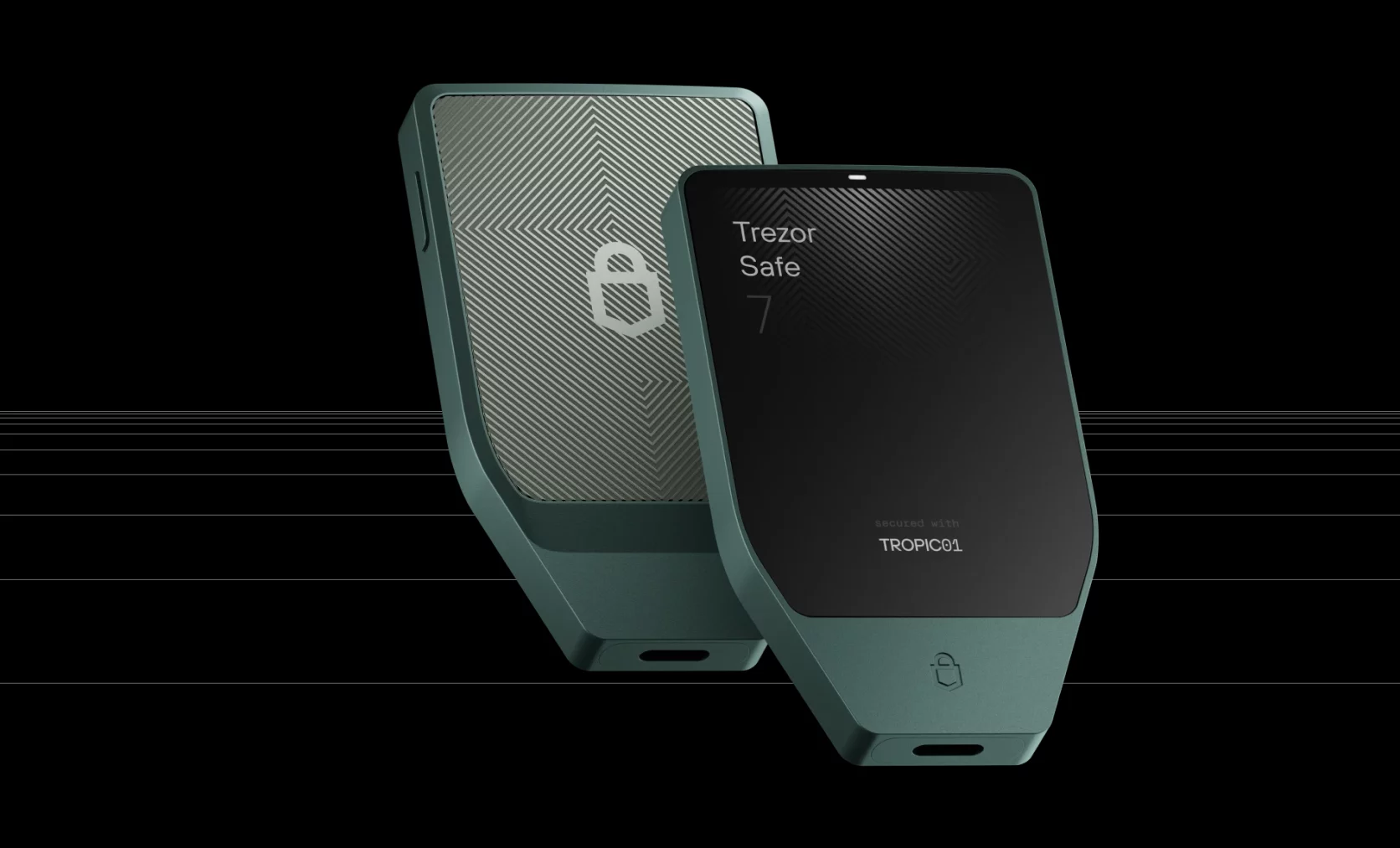
If Ledger wins on user experience, the Trezor Safe 7 wins on pure technical audacity. Released in 2026 by SatoshiLabs, it is the most forward-looking hardware wallet on the market — and perhaps the most important one for investors thinking about the next decade.
The TROPIC01: Hardware You Can Actually Trust
For years, a quiet controversy has simmered in the hardware wallet community: all Secure Elements were manufactured by third-party chipmakers operating under NDAs, meaning their internal designs were proprietary black boxes. You had to trust the chip manufacturer. Trezor has eliminated that dependency entirely with the TROPIC01, the world's first fully transparent and auditable Secure Element. The global security community can inspect and validate its internal architecture at the silicon level. It's not just open-source software — it's open-source hardware.
Quantum-Ready Security
The Safe 7 is the first mainstream consumer device to ship with post-quantum cryptographic (PQC) algorithms baked directly into its firmware chain:
- Boardloader & Bootloader: Protected by SLH-DSA-128 (SPHINCS+) — stateless hash-based signatures that verify firmware authenticity at every startup
- Device Attestation: Secured with ML-DSA-44 (Dilithium) — lattice-based signatures that prove the hardware hasn't been tampered with
Because the boardloader is written at the factory and physically cannot be changed, even a future quantum computer cannot forge a malicious firmware update. The Safe 7 can receive quantum-secure updates for the entire life of the device.
- Display: 2.5" Color Touchscreen, 520×380px, Gorilla Glass 3
- Connectivity: Bluetooth 5.0+, USB-C, Qi2 Wireless Charging
- Build: Anodized Aluminum Unibody, IP67-rated
- Battery: LiFePO4 (4× the charge cycles of standard Li-Ion)
- Supported Assets: 8,000+ coins and tokens
- Price: $249
Best for: Security professionals, long-term holders ("whales"), and anyone who wants maximum hardware transparency and future-proof quantum resistance.
#3 — Keystone 3 Pro: The Air-Gapped Power User
Transactions by QR Code Only
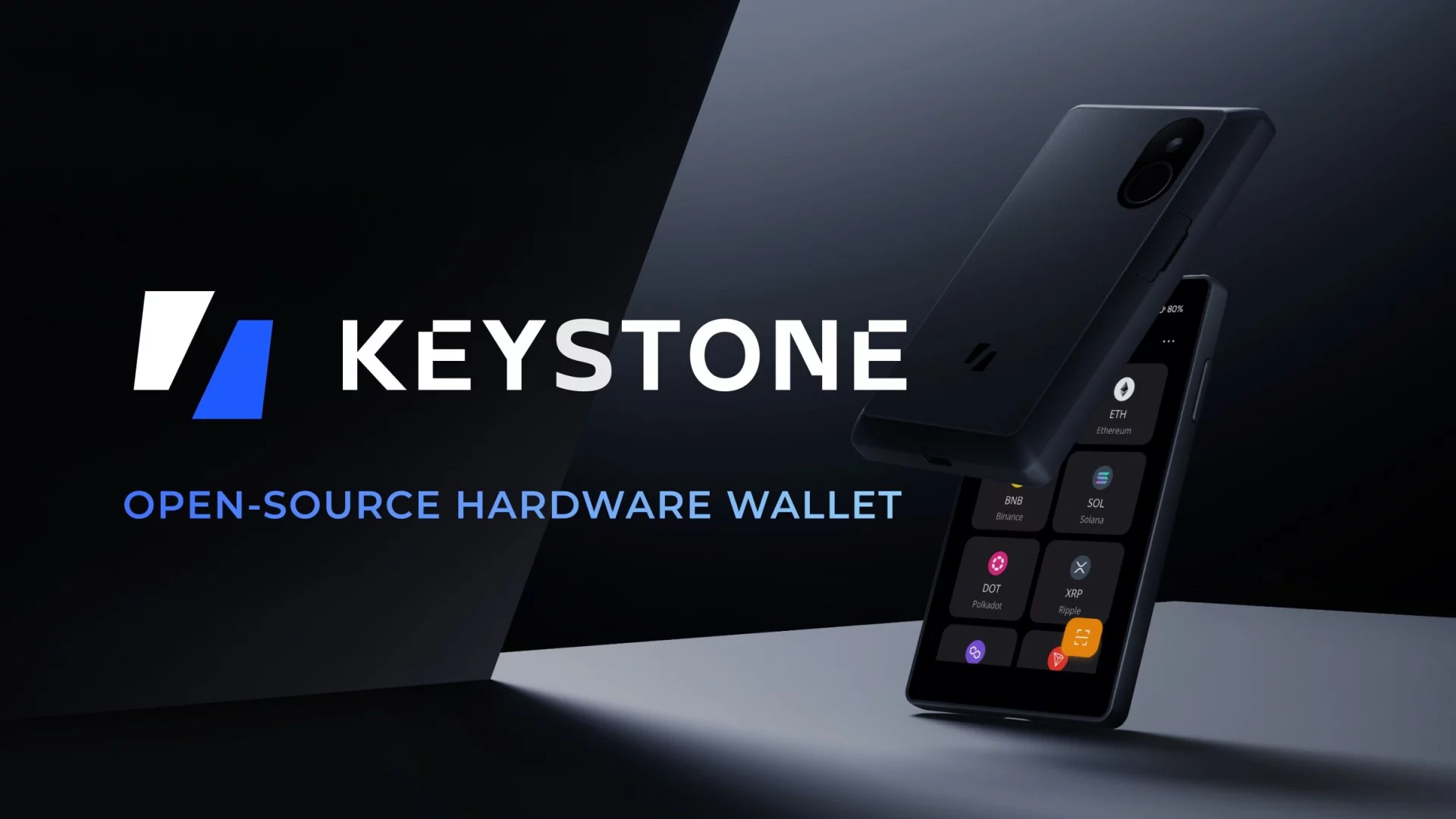
All transaction signing on the Keystone 3 Pro happens through visual QR codes. The device displays a QR code on its 4-inch color touchscreen; the user scans it with their phone. The phone displays a QR code in return; the device scans it to confirm. At no point does any data pass through a cable or wireless radio. This is the purest implementation of air-gapped security available in a consumer product today.
Triple-Chip Architecture
Most hardware wallets use a single Secure Element. The Keystone 3 Pro uses three separate EAL6+ chips, each responsible for a different function: private key storage, seed phrase management, and transaction signing. A partial compromise of one chip cannot cascade into a full compromise of the root of trust. The device also includes a physical anti-tamper system that immediately wipes all stored data if it detects an attempt to open the casing.
- Display: 4.0" Color Touchscreen
- Connectivity: QR code only (fully air-gapped)
- Security: Triple EAL6+ Secure Elements + self-destruct mechanism
- Recovery: BIP-39 and Shamir Backup (2-of-3 splits)
- Unique Feature: Full MetaMask Mobile support — the only air-gapped device with this integration
- Price: $149
Best for: High-net-worth DeFi participants, DAO operators, and anyone operating under a strict threat model who still needs mobile DeFi access.
#4 — Tangem Wallet: The Frictionless Entry Point
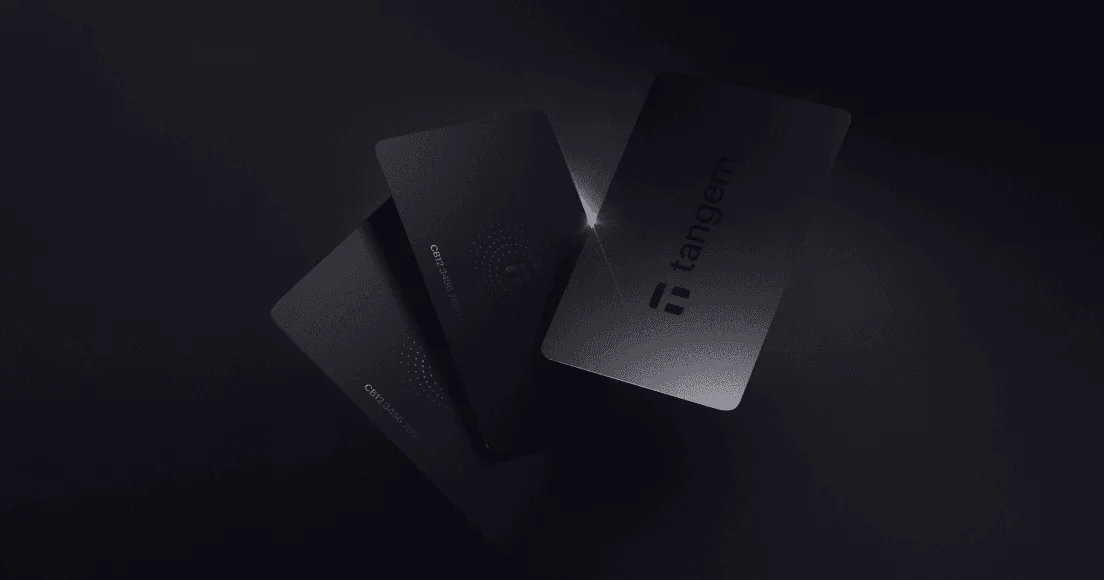
Tangem takes the most radical design approach on this list: it removes the screen, battery, and buttons entirely. The result is a credit-card-sized NFC device with an EAL6+ chip inside — and one of the most compelling security arguments in the industry.
No Seed Phrase, No Problem
The traditional 24-word recovery phrase is both the cornerstone and the greatest vulnerability of self-custody. It can be photographed, stolen, lost in a house fire, or extracted through phishing. Tangem sidesteps the problem entirely with its seedless-by-default model. Private keys are generated on the card's chip and never leave it. The "backup" is a second or third physical card with the keys cloned via encrypted NFC tap. Lose one card — use another. It's a fundamentally different mental model, and for many users, a safer one.
- Form Factor: Credit-card NFC chip (no screen, no battery, no buttons)
- Connectivity: NFC only
- Durability: IP69K-rated (waterproof, dustproof, EMP-resistant), 25-year hardware warranty
- Supported Assets: 16,000+ assets across 85+ blockchains
- Price: $54.90 (2-card set) / $69.90 (3-card set)
In early 2026, Tangem also launched the Tangem Ring — a wearable version of the same chip that enables tap-to-sign transactions directly from your finger.
Best for: Beginners, frequent travelers, and anyone who wants maximum physical durability and zero seed phrase management at a budget-friendly price.
#5 — OneKey Pro: The Open-Source Swiss Army Knife
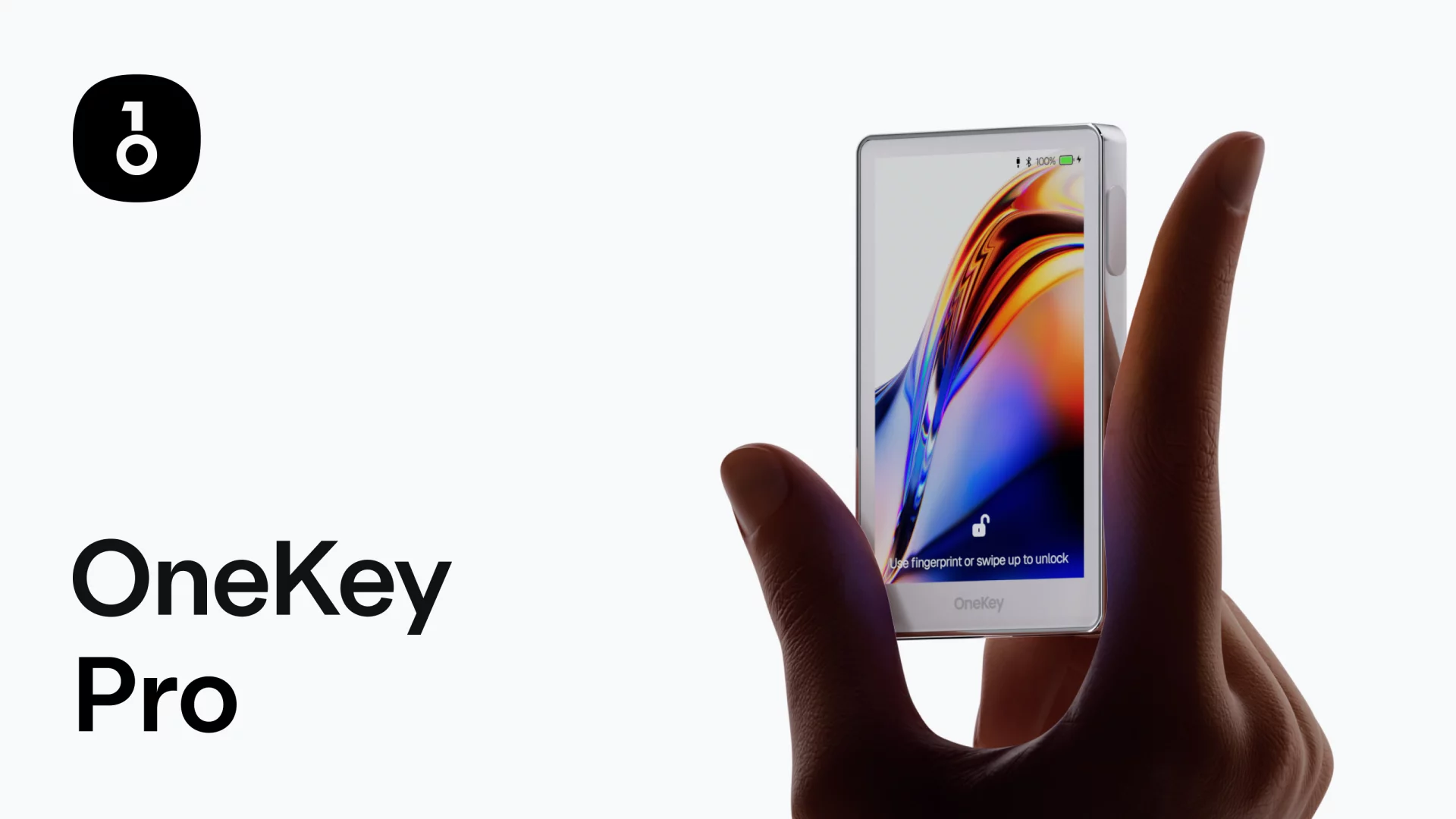
The OneKey Pro is the choice for users who refuse to make trade-offs. It offers open-source transparency, four separate EAL6+ security chips, a biometric fingerprint sensor, and support for every major connection protocol — all in a single device.
Four Chips, Every Protocol
Where most devices standardize on one or two Secure Elements, the OneKey Pro uses four separate EAL6+ chips to create redundant layers of hardware protection. And unlike wallets that force users to commit to one connection method, the OneKey Pro supports USB-C, Bluetooth, NFC, and QR-code offline signing simultaneously. At home on a trusted network? Use Bluetooth. In a public space or high-security environment? Switch to QR-only air-gapped signing with a tap of a setting. The device adapts to the threat level of the moment.
Full Calldata Transparency for DeFi
For DeFi traders, the OneKey Pro displays full calldata — all signature details and raw smart contract data — directly on the device screen. This matters because a sophisticated attack doesn't forge a transaction; it inserts a legitimate-looking transaction that does something slightly different than advertised. Seeing the raw calldata is the last line of defense against that class of exploit.
- Display: 3.5" Color Touchscreen with Haptic Feedback
- Connectivity: USB-C, Bluetooth, NFC, QR Code
- Security: 4× EAL6+ Secure Elements + Fingerprint Sensor
- Supported Assets: 5,500+ across all major EVM and non-EVM chains
- Firmware: Fully open-source
- Price: $278
Best for: Multi-chain power users, developers, and anyone who wants open-source hardware transparency combined with maximum connection flexibility.
The Threat Landscape That's Driving These Choices
Understanding why these devices matter requires understanding what they're defending against. The 2025 Bybit hack — still the largest crypto theft in history at $1.5 billion in stolen Ethereum — wasn't a brute-force attack. The Lazarus Group exploited a vulnerability in a third-party wallet interface, manipulating transaction approvals to trick authorized signers into moving funds they believed were secure. The funds were in cold storage. The signing process itself was the vulnerability. This single event is largely responsible for the industry-wide pivot toward Clear Signing and Secure Screen technology.
More recently, in April 2026, attackers drained $285 million from the Drift Protocol on Solana through a combination of social engineering and oracle manipulation — not a code exploit, but a human one. And AI-driven phishing has reached a level of sophistication that makes traditional vigilance insufficient: voice-cloned "customer support" calls, deepfake video instructions from apparent family members, and "address poisoning" attacks (one investor lost $50 million by copying a lookalike address from their transaction history) are now routine threats.
No hardware wallet protects a user who is socially engineered into signing the wrong transaction. But the devices on this list — particularly those with Clear Signing and full calldata display — make it significantly harder for attackers to hide what they're actually asking you to approve.
Quick Comparison: Which Wallet Is Right for You?
- Best overall + best UX: Ledger Stax / Ledger Flex — get up to $20 in bonuses with our referral link
- Best for long-term security & quantum resistance: Trezor Safe 7
- Best air-gapped device for DeFi: Keystone 3 Pro
- Best for beginners & travelers: Tangem Wallet
- Best for multi-chain power users: OneKey Pro
Final Thoughts
Self-custody in 2026 is no longer a niche hobby — it is a financial discipline. The wallets reviewed here represent the current state of the art in private key protection, each engineered to counter a threat environment that would have seemed like science fiction just five years ago. Whether you're storing a modest allocation or managing institutional-grade assets, the principle is the same: the only keys that matter are the ones you control.
If you're ready to take that step, start where millions of users do — with Ledger. The combination of battle-tested Secure Element technology, Clear Signing protection, and the most mature software ecosystem in the industry makes it the safest and most practical entry point into true self-custody.
🎁 Exclusive Ledger Offer: Use our referral link to purchase a Ledger Stax or Ledger Flex and receive up to $20 in bonuses on your order. Don't leave free money on the table — your security upgrade pays for itself. → Claim your Ledger bonus now
Frequently Asked Questions
Quick answers to the most common questions about this topic.

For educational purposes only. Nothing here constitutes financial or investment advice. Crypto markets are highly volatile — always DYOR before making any decisions.
Fact-checked per our editorial policy. We maintain strict independence from advertisers. Spot an error? Let us know.